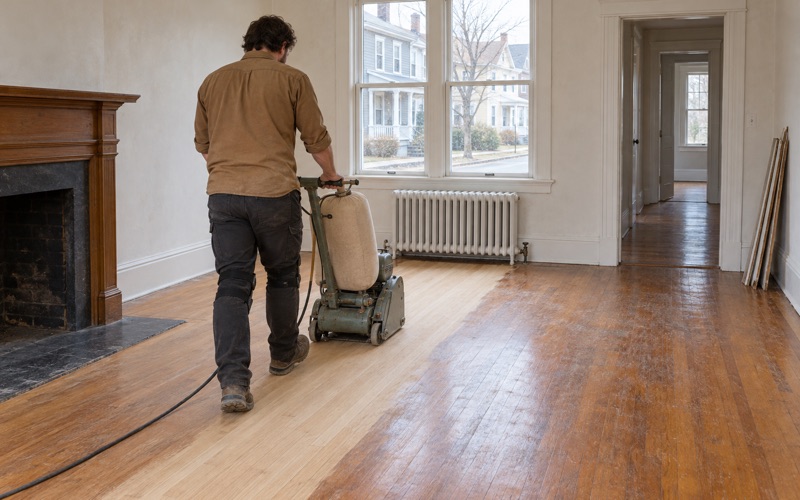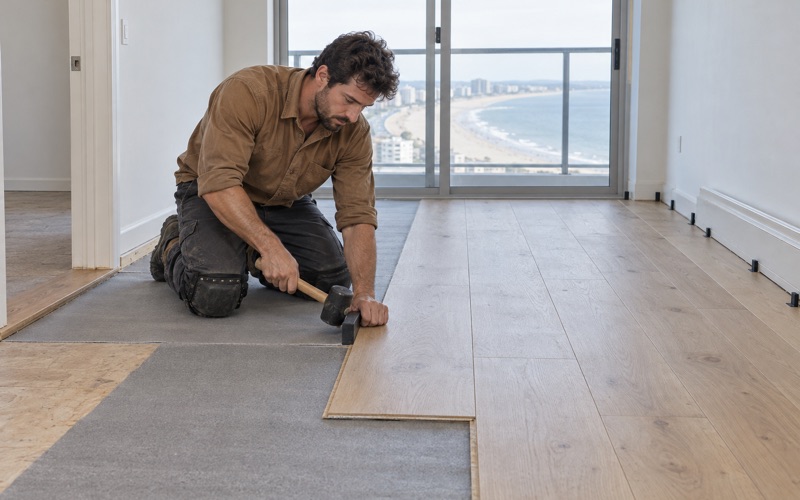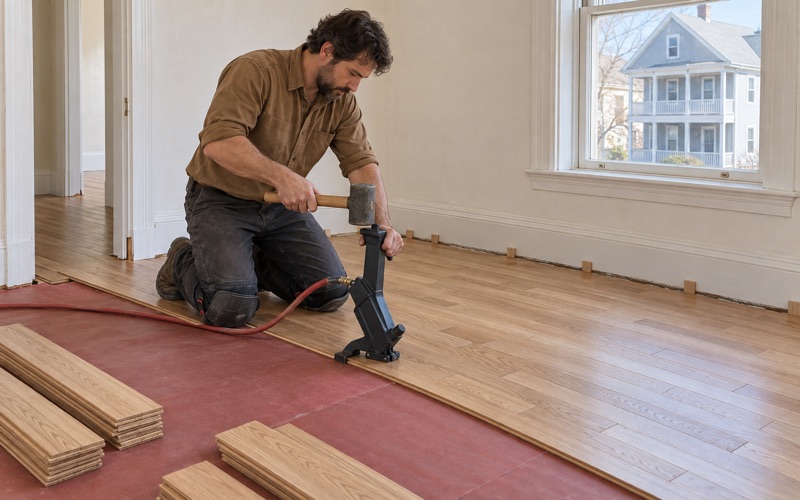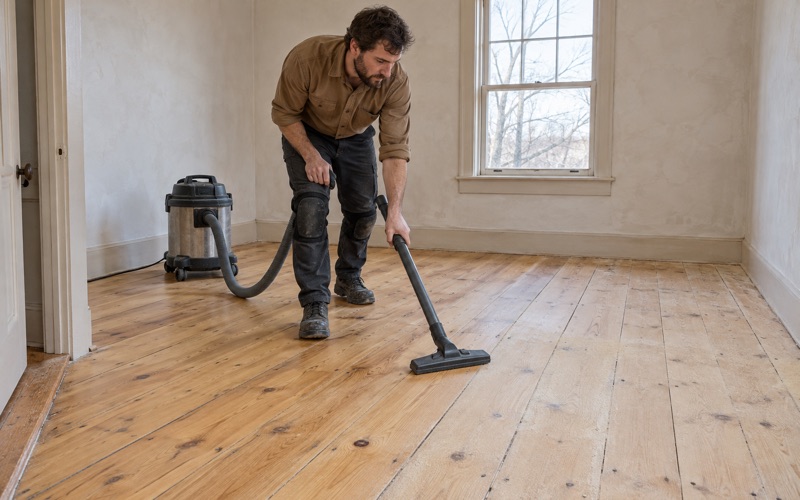
Revere Wood Flooring has been sanding, repairing and installing wood flooring in Malden for more than twenty years, and a good share of that work runs on somebody else’s clock. A unit has to be empty, finished and dry before the next tenant signs, and the floor is the one trade that can hold the whole schedule up. We quote to that date first and to the square footage second.
What that looks like in practice is simple enough. We ask when the keys come back and when the unit has to be shown, then work backward through tear-out, sanding, stain if there is one, coats and cure time. If the two dates do not leave room for a full sand, we say so at the estimate rather than halfway through the job.
The rest is the ordinary trade. Red oak strip floors sanded one time too many, board gapping that opens every winter and closes by June, pet urine stains that went through the finish years ago, stair treads worn hollow in the middle. What changes from one city to the next is who signs off on the unit afterward, and when.
Floors Between Tenants Under Malden’s Rental Inspection Program
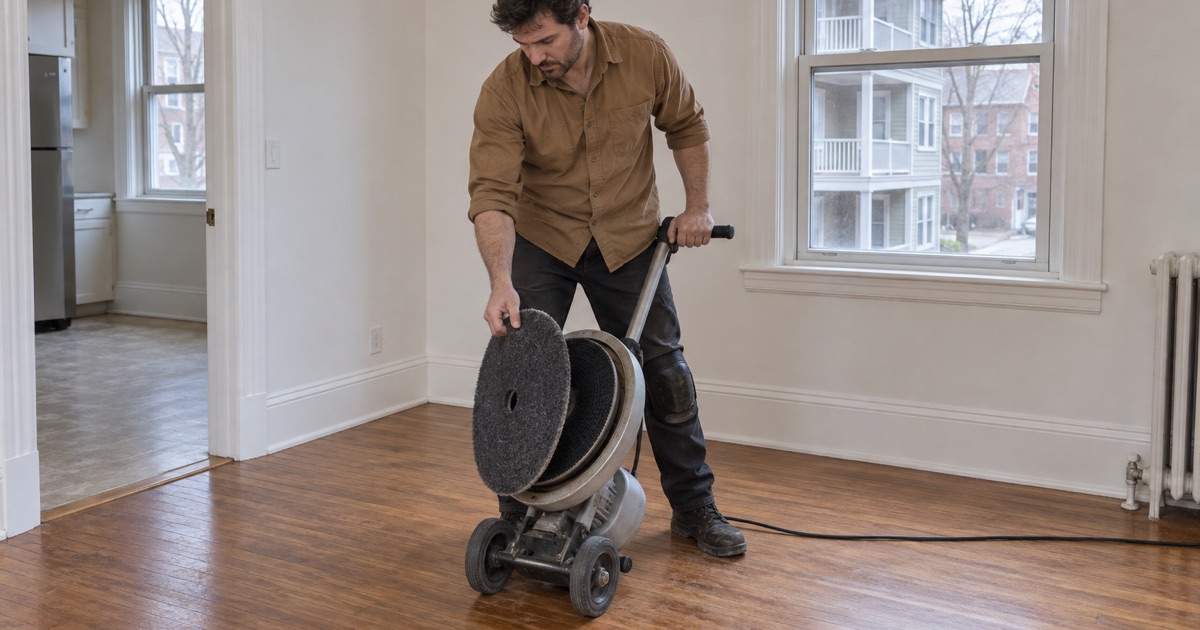
Malden requires a Board of Health inspection of a rental unit when the unit is vacated and again before it is reoccupied. Section 9.40 of the city ordinance sets that inspection against Chapter II of the State Sanitary Code, and it is triggered by the vacancy itself rather than by a date the owner picks.
That matters more in Malden than it would in a city of owner-occupants. Of the 26,042 occupied housing units here, 15,298 are rented, or 58.7 percent. A renter-majority housing stock turns over constantly, and every turnover opens a window and then closes it again.
The floor work we do in this city lives inside that window. The inspection is a sanitary code matter and not a refinishing review, but the practical effect on our scheduling is the same: the unit has to be empty for the sanding, and it has to be empty for the inspection, and those are usually the same few days.
The vacancy is the appointment
Because nothing can be scheduled off a fixed annual date, we keep turnover work loose on the calendar and tight on duration. A one-bedroom needing a screen and recoat is a different commitment from the same unit needing a full grit sequence, stain samples and three coats, and the owner should know which one they are buying before the last tenant hands back the keys.
When a unit comes back later than expected, the risk is not the sanding. It is the cure. A floor walked on too early shows it for the life of the finish, in the traffic lanes first, and we would rather move a start date than shorten a cure.
Reading the floor before it is empty
Most of what sets the length of a job can be seen with the tenant still living there. Worn traffic lanes through the doorways, hollow spots where a board has let go of the subfloor, cupping along the edges of the strips, a dark ring where a plant sat for a decade.
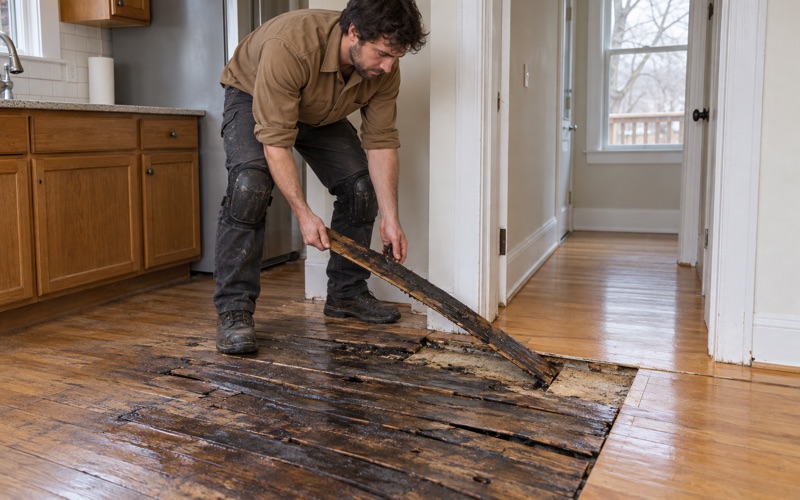
We walk the unit while it is occupied when the owner can arrange it, put a moisture meter on the floor in two or three rooms, and come back with a number of days rather than a range. Water stains and pet urine that reached the wood are what turn a two-day recoat into a week, and both are visible long before the moving truck arrives.
Looking for wood-flooring closer to Saugus? See Saugus Wood-Flooring.
What Changed for Malden Landlords in November 2025
Council File #276-25, an ordinance amending Malden’s rental inspection rules, went before the City Council at its November 25, 2025 meeting and passed. It recodifies the requirement as Section 9.16 and extends the Rental Unit Inspection Certificate requirement to every non-owner-occupied unit.
The part that changed hands is the old exemption. Owner-occupied buildings of three units or fewer used to sit outside the certificate requirement; under the amendment the rented unit in one of those buildings is a non-owner-occupied unit like any other, and the requirement reaches it. An owner living downstairs no longer takes the building out of the program.
We are a flooring company and not your counsel on the ordinance, and the Board of Health and the Director of Inspectional Services are the ones who answer questions about the certificate itself. What we can do is keep the floor from being the reason a unit sits idle between tenants.
Malden’s two- and three-family houses
Malden’s housing stock leans hard toward small multifamily. Of 27,876 housing units, 5,987 sit in two-unit buildings and another 3,380 in buildings of three or four. Those are the buildings the amendment now reaches that it did not reach before.
They also tend to be old, and old here means real wood. Narrow red oak strip, sometimes eastern white pine on an upper floor, face-nailed with cut nails in the oldest of them, and more often than not buried under two or three later floor coverings.
When a unit in one of these houses turns over, the question is usually not whether to refinish but how much floor is actually left. We check remaining thickness above the tongue before quoting a sand, and where a previous owner already took the boards as far down as they will go, replacing the worn rooms costs less than trying to buy one more pass out of them.
One floor at a time
In a two-family we work one floor at a time, so the household on the other floor stays in the house while the job runs. That means containment at the stairwell, dustless sanding with a HEPA vacuum on the machines, and finish scheduled so the shared stairs are passable morning and evening.
It also means the two floors can be done in two different seasons if that is what the budget wants. The unit that is turning over gets done now; the owner’s own floor waits until it suits them.
Getting a Unit Ready for Its Inspection
Owners who would rather not arrange an inspection at every single vacancy have another route in the ordinance. Section 9.40.1 sets up a Three Year Inspection Exemption Program, under which an owner with two years of compliance behind them may apply to Malden Health and Human Services for less frequent inspection.
The application carries its own costs, a $75 application fee plus inspection fees of $50 per unit for the first four units in a building and $20 for each additional unit, capped at $1,000 per building, and the city issues a written decision within 60 days. The checklist that comes with it includes a lead paint affidavit under 105 CMR 460.000 and an asbestos affidavit.
For a landlord with a clean record and several units in one building, that changes the rhythm of floor work from emergency to planned. Planned is the version we can schedule properly and price better.
Buildings from before the lead rules
Age is the thing to establish before any sander is switched on here. Of Malden’s 27,876 housing units, 12,572 were built in 1939 or earlier, the largest era in the stock by a wide margin. Massachusetts runs its own lead-safe renovation rules on housing built before 1978, and a floor job touches painted surfaces constantly: baseboard, quarter round, stair risers, the shoe molding that has to come off before the edger can reach the wall.
So we read the build year and the painted surfaces first and set the work up accordingly, rather than meeting the problem with the machine already running. In a unit that has to be inspected on a fixed date, a surprise at that stage is the expensive kind.
What comes up before anything goes down
Turnover units in Malden often have decades of floor coverings stacked on the oak. Carpet with a foam pad bonded to its back, tack strip nailed around the perimeter, staples by the hundred, linoleum, and under older linoleum a black mastic that does not belong anywhere near a drum sander.
We strip all of it, pad, staples, tack strip and adhesive, before a single pass is made, and we check what is left of the wood before promising a refinish. An old pine floor sanded four times has little left to give, and an engineered floor’s wear layer gets measured rather than guessed at.
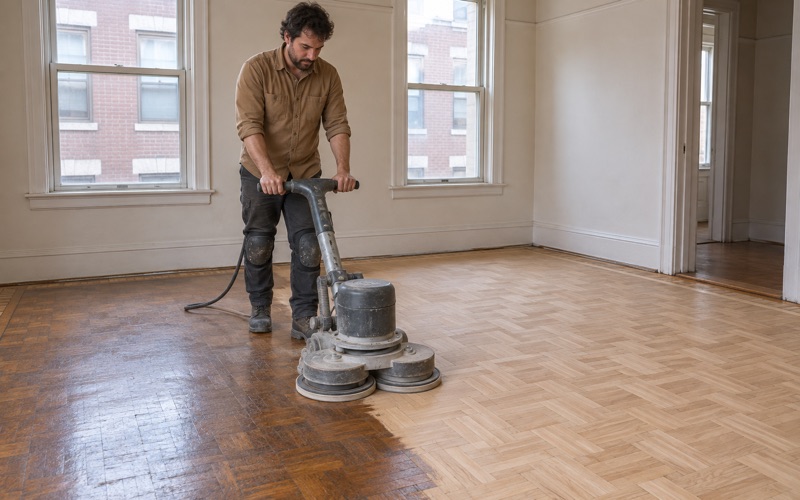
What turns up underneath is usually worth the trouble. Oak that spent thirty years under carpet is often in better shape than the rooms that stayed exposed, because the pad took the wear, and the parquet and herringbone that show up in some of the older parlors get finer grits and more patience than a strip floor needs.
Planning a Floor Job Around a Malden Turnover
The finish decides the calendar. Waterborne polyurethane goes down and hardens fast enough to put a unit back in service inside a working week; oil-modified polyurethane ambers the wood and asks for more time before furniture lands on it. Massachusetts holds coatings to tighter limits than the federal rules do, so the shortlist we choose from is already narrowed to what can legally be used in the state.
Sheen level is worth deciding on purpose in a rental. A satin surface hides the scuffing that arrives with every new tenant, while a gloss reports it. If stain is in the plan we water pop and put samples on the actual floor instead of handing over a fan deck, because red oak, white oak and maple each take the same can differently.
When a full sand is not the answer
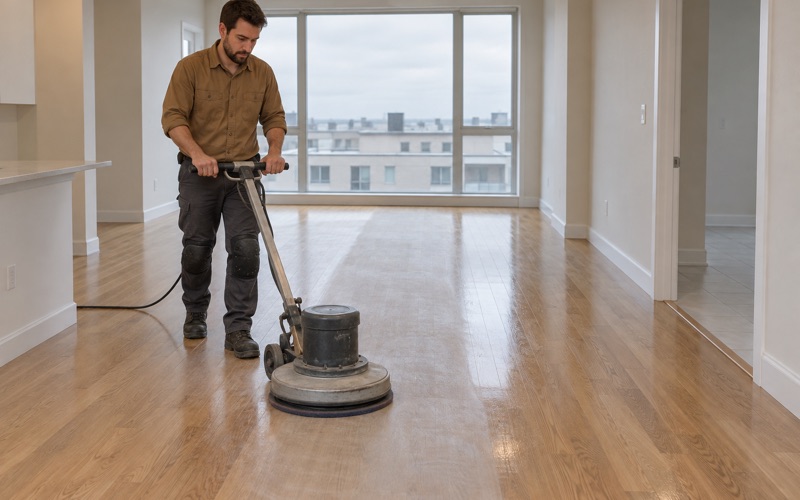
Not every turnover floor needs to go back to bare wood. Where the finish is worn but the wood underneath is sound, a screen and recoat with a buffer puts a uniform surface back in a fraction of the time and leaves the thickness intact for a future sanding.
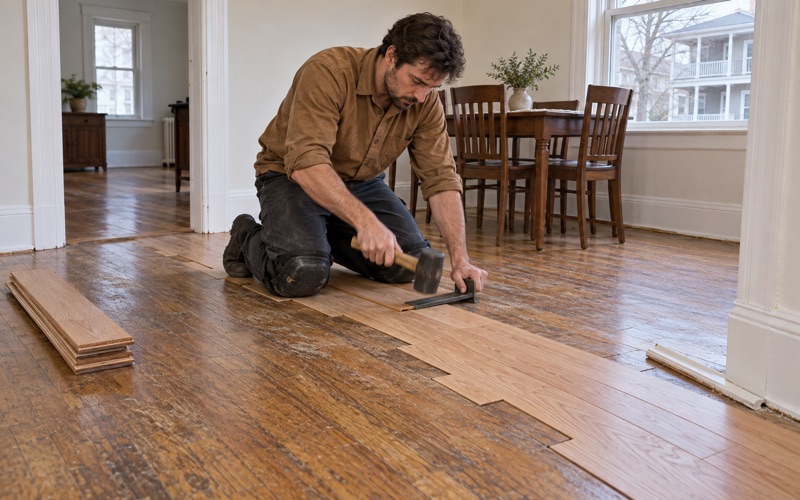
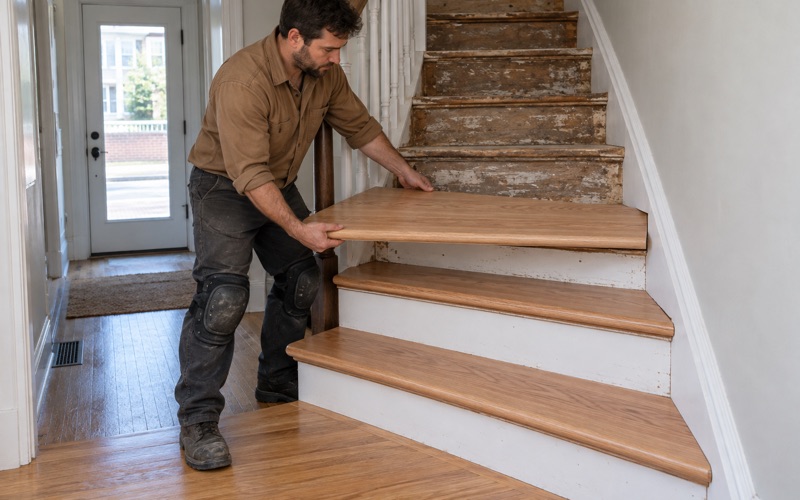
Where boards are broken, stained through, or missing after a radiator came out, we weave in matching boards rather than filling the gap, cutting the patch into the surrounding field so the tongue and groove lines run through it. Stairs we quote by the tread and the riser, never folded into a square-foot number, because they are slow, hand-worked and nothing like an open room.
Larger buildings on the turnover clock
Malden has real density as well: 4,831 of its housing units sit in buildings of fifty or more. Those jobs are as much logistics as flooring, with freight elevator windows, a loading dock, neighbors directly below the sander, and the building’s own rules on rug coverage and underlayment, which we read before quoting rather than after.
Tell us the date the unit has to be ready and we will work backward from it: what can be done in the time, what it costs, and what is better left for the next vacancy.
- 20+ Years on New England Floors
- Free Written Estimates
- Dustless Sanding